

How do you choose a sports physiotherapist?
Not sure which sports physiotherapist to see? Prepare the right questions, compare relevant experience and understand what a first assessment can clarify.
After an injury, the best first appointment is one that helps you understand what has happened, what you can do now and what your sport will demand later. You do not need to find a practitioner who “owns” your exact condition. Look for a physiotherapist whose work and availability fit your goal, and bring enough detail for an individual assessment.
What should you describe?
Start with the movement or event that caused the problem, then explain how symptoms have changed. Include your usual training, competition or recreational activity and the movements you hope to regain. “I can walk but cannot accelerate”, for example, tells a clinician more than “my leg is injured”. Mention previous injuries, any medical or surgical advice and whether pain changes the next day after activity.
If you cannot bear weight, have marked deformity, a new loss of feeling or weakness, or symptoms after a significant head impact, seek prompt medical assessment. Physiotherapy does not replace urgent care or a medical diagnosis when one is needed.

What should a first assessment clarify?
The physiotherapist can ask about symptoms, examine relevant movements and discuss what is uncertain. An appropriate plan may involve activity adaptation, progressive strengthening or sport-specific tasks, depending on the findings. Ask what the working explanation is, which activities to continue, what would warrant medical review and how progress will be assessed. A scan or a particular hands-on technique is not automatically necessary for every sports problem.
The goal is not merely to stop pain at rest. Returning to a run, training session or game may involve different loads and movement demands. A useful plan explains what must be reconsidered before the next step, without guaranteeing a date or eliminating all risk.
Which Rebalance profile fits your question?
The sports team shares broad rehabilitation work. Amine Berdii describes manual therapy and sports rehabilitation; Mattéo Cattez offers general and sports physiotherapy. Ysaline Colpaert highlights running as well as sport, while Zoé Debaize describes general and sports practice. These descriptions help you choose a person, not a fixed allocation of injuries. You can also compare the team in the directory.
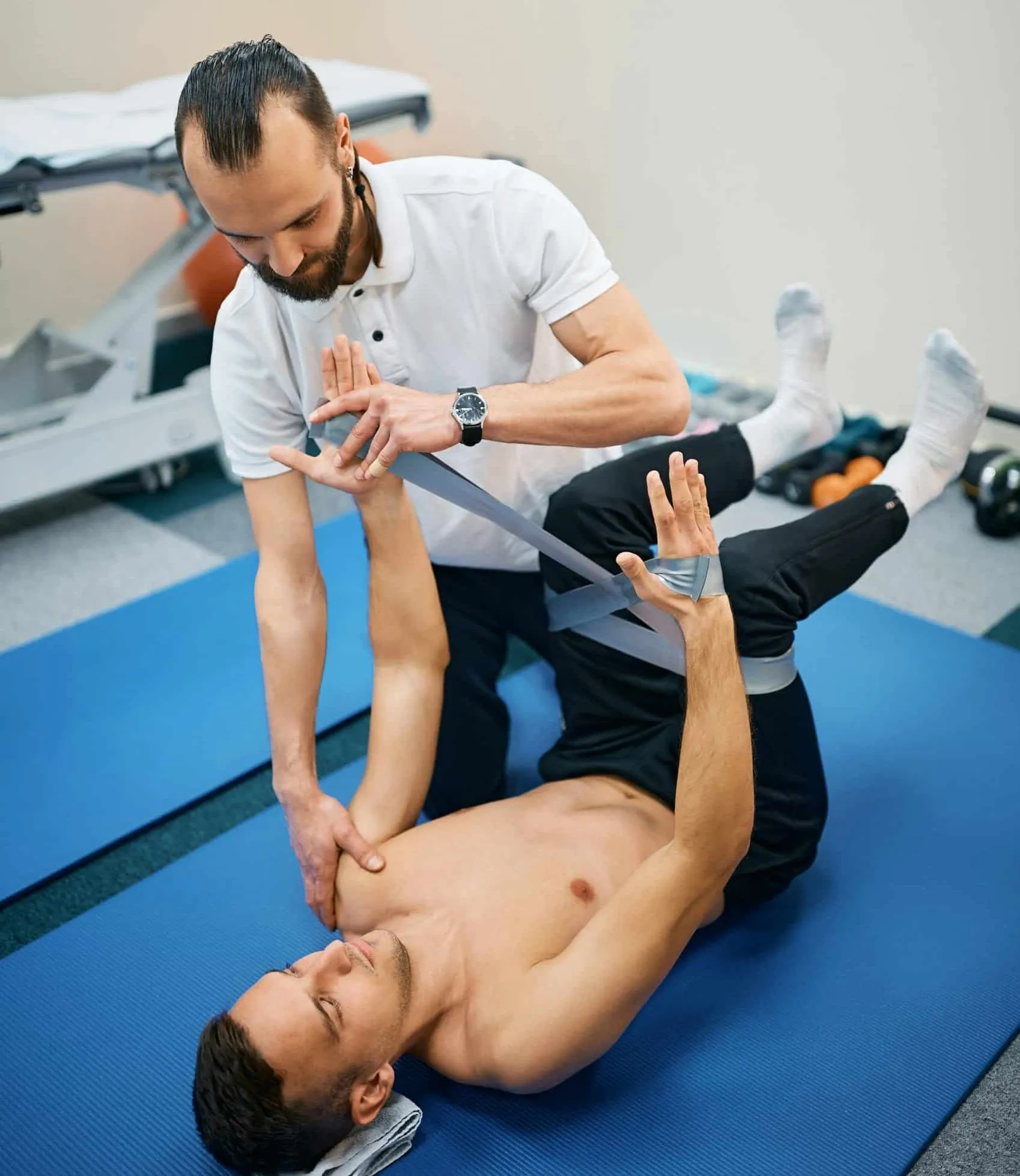
For the care itself, the sports physiotherapy page explains the discipline. If your question is more specific, read our guides to an ankle sprain, Achilles pain in runners or groin pain during sport before an appointment. Each is a way to prepare questions, not a replacement for being assessed.
Source
- NICE, “Low back pain and sciatica in over 16s”: an example of why assessment and treatment choices should be tailored rather than prescribed by one method alone. This guideline concerns back pain, not every sports injury.
Updated .