Swallowing is so automatic that we often forget just how essential it is. However, when it becomes difficult, painful or dangerous, it profoundly changes everyday life. Swallowing a glass of water, eating a meal or even managing your saliva can suddenly require considerable effort. Swallowing disorders - known as dysphagia - now affect a large number of patients, both children and adults, and can be linked to a wide variety of causes: muscular, neurological, mechanical, postural or even emotional.
In this article, we'll explore the most common causes of these disorders, the warning signs and, above all, the practical solutions offered by the maxillofacial physiotherapy and osteopathy. These two approaches, which are complementary and patient-centred, offer precise, comprehensive work to improve swallowing function, reduce associated risks and restore real comfort in everyday life.

1. Understanding swallowing disorders: a complex mechanism that can go wrong
Swallowing is a precise sequence of more than 30 muscles coordinated by several areas of the nervous system. When everything is working, the act takes less than a second. When something goes wrong, the consequences can be serious.
Common causes of swallowing disorders
Muscular or mechanical origins
- Tension in the muscles of the neck or floor of the mouth
- Weakness of the tongue or pharyngeal muscles
- Temporomandibular joint disorders (ATM)
- Cervical scars after operations
- Projected head posture, often associated with screen work
ENT origins
- Large tonsils
- Partition deflection
- Chronic infections
- Persistent inflammation of the pharynx
Neurological origins
- AVC
- Parkinson
- Multiple sclerosis
- Neuropathies
Digestive origins
- Gastro-oesophageal reflux disease
- Hiatus hernia
Functional causes (particularly in children)
- Persistent infantile swallowing
- Mouth breathing
- Associated orthodontic disorders
2. Warning signs
The symptoms are not always spectacular, but they must be taken seriously, as dysphagia can lead to dangerous false routes.
Most common symptoms:
- Difficulty swallowing solids or liquids
- The feeling that "it's not working
- Coughing during or after meals
- Wet voice
- Neck pain when eating
- Excessive salivation or difficulty managing saliva
- Rapid fatigue during meals
- Involuntary weight loss
- TMJ discomfort or blockage
In the face of these signs, an assessment is essential. Work can then be directed towards maxillofacial physiotherapy, osteopathyor, in some cases, to an ENT specialist or gastroenterologist.
3. How maxillofacial physiotherapy helps to improve swallowing
La maxillofacial physiotherapy is one of the most recommended approaches for swallowing disorders. It specifically targets the muscles involved in mastication, the tongue, the throat and respiratory mechanics.
Treatment objectives :
- Strengthen the muscles of the tongue and pharynx
- Improving the coordination of swallowing movements
- Work on breathing patterns (in particular the transition from mouth breathing to nasal breathing)
- Correcting head and neck posture
- Reduce tension in the jaws
Examples of exercises used:
- Exercises to strengthen the tongue (thrust, elevation, lateralization)
- Functional chewing exercises
- Targeted work on TMJ mobility
- Saliva management techniques
- Rehabilitation of the supra- and sub-hyoid muscles
Results can be rapid, particularly for children with atypical swallowing or mouth breathing, but also for adults with neck tension or postural problems.
4. The contribution of osteopathy: restoring overall balance
Osteopathy works alongside physiotherapy to treat the mechanical and postural causes of dysphagia.
Useful approaches to swallowing disorders :
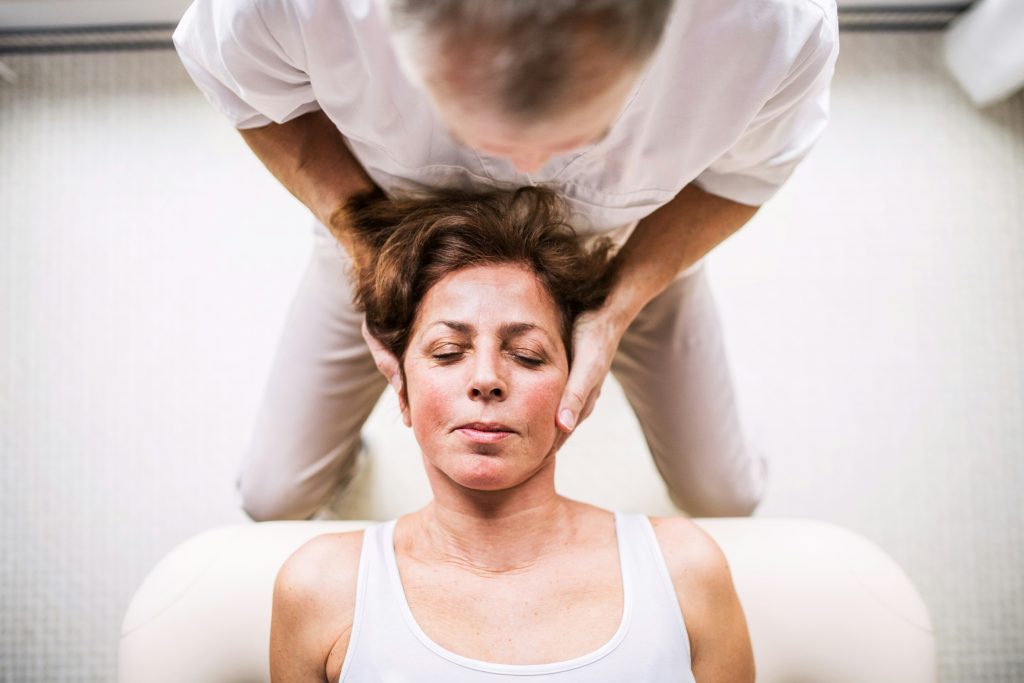
✔ Release of cervical tension (C0-C1-C2, often involved)
✔ Work on the mobility of the hyoid bone
✔ TMJ treatment and masseter/pterygoid muscles
✔ Normalising the diaphragm when breathing influences swallowing
✔ Visceral approach on the oesophagus and gastro-oesophageal junction (particularly in cases of reflux)
✔ Overall postural work Projected head, kyphosis, scapular tension
Osteopathy provides a systemic view of the patient, making it possible to improve the overall context in which swallowing takes place.
5. Combined management: often the most effective solution
In most cases, the suit maxillo-facial physiotherapy + osteopathy gives the best results. The two practices complement each other naturally:
- physiotherapy strengthens, coordinates and rehabilitates
- osteopathy frees, realigns and optimises overall functioning
This synergy is often the quickest way for patients to regain fluid, pain-free swallowing.
Visit Medical CentreThis complementary approach is regularly used according to the patient's needs, while remaining perfectly adapted and personalised.

6. Conclusion: relearn how to swallow, regain confidence, breathe more freely
Swallowing problems are never trivial, because swallowing is a vital, social and everyday act. When swallowing becomes difficult, it can quickly lead to stress, isolation, loss of enjoyment of food and respiratory complications.
The good news is that targeted, precise and well-coordinated treatment between a maxillo-facial physiotherapist and an osteopath can offer significant - sometimes spectacular - improvements in just a few sessions.
Understanding the cause of the problem, working on the function, releasing tension and re-educating the overall mechanics will help restore movement that is as natural as it is safe.
If you or your child is experiencing difficulty swallowing, neck pain when eating or persistent mouth breathing, a specialist assessment is the first step towards real relief.